Creating Value In Schools

Liz Worthen is the owner and editor of Creating Value in Schools. Her career in education spans teaching, training, commissioning and programme development, creating resources which enable leaders to flourish in their roles. Listen to the recording (10 minutes) or read below.
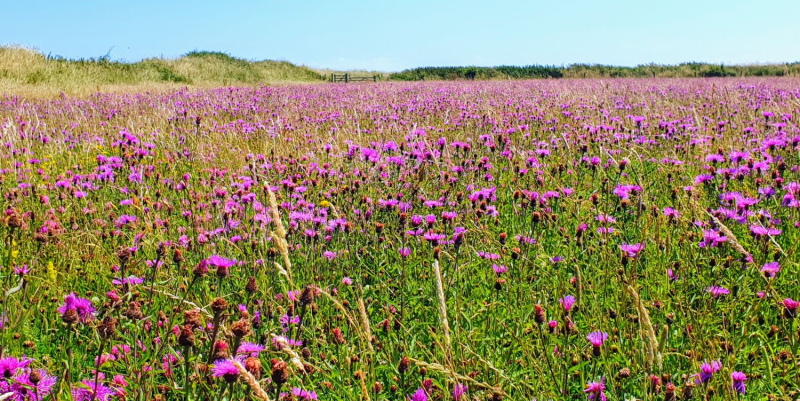
What do we mean by sustainability? What does it mean to work sustainably or build a more sustainable organisation? Is it all about the environment, climate, or is there more to it? What's it got to do with schools? It’s a question that’s been occupying my brain! My thinking on this was shaped by the conversation I had with Paul Edmond, Chief Finance and Sustainability Officer at Heart Academies Trust about Seeking the co-benefits. He talked about the Harvard Business School's three Ps for a sustainable organisation – their triple bottom line. If you've got those three P's working together in harmony, that's what a sustainable organisation looks like. Here’s how Paul explained it. ‘I think it was Harvard Business School, that in the 1970s or 80s put out the proposal that actually for a sustainable organization, you need to be thinking about profit. So that's your first P, that's fine, get that. You need to be thinking about people, because your business won't work unless you've got good, healthy people. ‘You need to be thinking about the planet and the environment because actually that supports healthy people and healthy profits. And if you've got those three P's working together in harmony, that's what a sustainable organisation looks like. And I think that's reflected in a lot of the really successful organisations, that over time really invest in their people, invest in the environment and the planet. Everything is interconnected. ‘For the private sector, it helps support profits. For us, helping to support an environment for financial efficiency is probably a better phrase. It doesn't start with a P though, but it helps us in terms of managing our budgets. So having those three P's as a business model, I think really works and there's a lot of evidence to support it.’ As suggested there, profit maybe isn't the best word to use in the educational context, though it could be that rather than profits for shareholders, our focus is outcomes for learners. And schools still need to balance the books, make best use of resources, stay financially sustainable – all challenges in the current climate. The United Nations describes their 2030 Agenda for Sustainable Development as ‘a plan of action for people, planet and prosperity’. They have two further Ps: peace – ‘there can be no sustainable development without peace and no peace without sustainable development’ – and partnership, as the means through which these goals can be achieved. It’s this agenda which is the basis for the 17 sustainable development goals. What I take from these goals is the recognition that everything is interconnected: in order to create good living spaces for people, or ensure that there’s enough to eat and clean drinking water, we have to take care of the climate. Economic development requires access to energy sources. Taking care of the planet means a better quality of life for people. To consider what this might look like in practice, let’s return to Paul Edmond. He shared how in his trust they are always looking for the co-benefits – unpicking how a project or activity might benefit in multiple ways, before deciding if it’s a worthwhile investment. Here he is giving an example. ‘Let's take, say, investing in biodiversity outside. So we've got fields like every school has, and I think everyone quotes that if you added up all those fields across the country, it's twice the size of Birmingham. How true that is or not, I don't know, but it gives you an idea of the kind of space we're talking about. ‘If we can invest in those fields to improve biodiversity, rewilding, adding trees, adding hedging, all the steps you can take – well, the benefits are huge. ‘It's just better for the planet, so tick in the box for that. In terms of adaptation and resilience of your school estate, trees and hedging generally help cool your estate. ‘So if you're in say a large urban area, which is going to suffer from heating, and we've got more extreme weather with hotter temperatures, if you're cooling your environment, it's a better place for children and staff to be. ‘If you've got potential drainage problems in the area, so you're at flood risk, putting more trees and hedging in there reduces that flood risk. It needs advice, support and guidance, but there's lots of steps that can be taken. It's about engaging all the right people in that decision-making. ‘If you're then thinking about: how do we look after people? Well, actually one of the best ways that’s recognised in terms of improving wellbeing, is improving that connectedness to nature. ‘So we're bringing nature back into the school estate. We're creating areas where staff can relax and catch their breath a little, and where students can have a peaceful, calm environment. That helps with the wellbeing initiative. ‘If we're then thinking about catering, well, actually part of that biodiversity we're adding, there's absolutely no problem at all making it edible. So then if we’re adding food into the environment, then the children can collect and bring it in, the catering team can use it and we can all eat it. Happy days! That's fantastic. ‘Then, if we can create environments that complement what's being taught, say in a biology, science or geography lesson, the teachers can take the children outside and actually engage with what they're being taught in the classroom. Then you're enhancing the teaching and learning. ‘So many different things in just doing one thing, but you've got to do that one thing really well. Are we engaging the children? Are we engaging the teachers? Are we engaging the support staff? Are we engaging specialists who can teach us how to look after it? There's no point in doing it if it's just going to die over summer, because it's a very expensive investment. ‘So it's about engaging all the right people in that decision-making, that then can contribute to a fantastic outcome for lots of people. So that's how we’re really unpicking things and then adding all those benefits up.’ (Seeking the co-benefits: people, planet - and financial efficiency ) As Paul says, for things to be sustainable and lasting, long-term planning and engagement is required. Planting some seeds isn’t enough; you need to know how you're going to nurture them. So you can have the best system, best processes, but it's all about people and about leadership Education is not an easy place to be at the moment, with many pressures on schools and other settings – financial pressures, societal pressures, staffing pressures. John Viner, who has served as a headteacher, teacher trainer, and chair of governors, spoke about the need to alleviate this pressure in our conversation around how to entice people into our schools. He has a simple piece of advice to offer. ‘I know from 25 years of teacher training, that we have had some wonderful people who've trained as teachers, but they don't stay. So what can we do? Well, it's easy to say and hard to do. But we need to take the pressure off, whatever that means. ‘We need to be kinder. Now I know that sounds trivial, but we need to be kinder to our team. The school where I'm chair of governors, we are kind to our teachers. The teachers say, this is so much better than where I used to be because people believe in me and we've got to generate that kind of feeling.’ Being kind was something that Benedicte Yue, Chief Financial Officer at River Learning Trust also spoke about. She was sharing lessons learned through dealing with challenging financial positions. Yes, vision and strategic planning are required, but people and teamwork are vital too. ‘It's important to have a very clear strategy and operating model, so you need to have a clear organisational wiring to support your ambitions. There are different models with more or less autonomy, but in all cases, you need to have a very clear vision of what you want to achieve, and especially when you don't have enough resources, you need to be able to strategically allocate your resources. ‘Good planning is key, is key to anticipate. The more you anticipate, the more you avoid difficult decisions. You also need to look at different strategic horizons. Having a strategy also helps central alignment and coherence and avoid chaos so that everybody's aligned around the same vision. It unites people. When leaders can stimulate healthy debate, it fosters creativity and innovation. ‘The other important thing is people. So you can have the best system, best processes, but it's all about people and about leadership. In our schools, where we were able to turn things around, is really when we had strong leadership and alignment at all levels. So the very important message here is to develop your people. ‘The other concept I've learned and really value in this sector is the importance of agency. It's a human need. So don't micromanage people. Tell them what you want to achieve, but let them decide how. ‘Another important thing is working together, teamwork and mutual respect. In our world there is so much complexity these days that people at the top cannot do everything. So the idea that one person has all the answers is no longer adequate to the challenges we are facing today. ‘I really believe that the whole is greater than the sum of the parts, so when leaders can stimulate healthy debate, it fosters creativity and innovation. It creates a marketplace of ideas, from which a portfolio of alternatives emerge.’ Kindness, teamwork, enabling creativity, seeking co-benefits, and counting the things that matter: these all sound like ingredients of a sustainable organisation. I'm sure there's a lot more to unpack on this topic, but I hope that's inspired some thinking. In the end we will conserve only what we love; we will love only what we understand; and we will understand only what we are taught. (Baba Dioum, Senegalese forestry engineer) Disclosure: If you buy books linked to our site, we may earn a commission from Bookshop.org, whose fees support independent bookshops.What do we mean by sustainability?
Three Ps: People, planet and profit
Sustainable development goals
Unpicking the benefits: investing in biodiversity
Lasting engagement and kindness
Planning, people and teamwork
Ingredients for sustainability
What next?